CFO vs accountant vs bookkeeper
A bookkeeper records transactions. An accountant closes the books, files taxes and keeps you compliant. A CFO uses those numbers to make decisions: pricing, margin, cash, hiring and funding. They are not rungs on one ladder, they are three different jobs, and having a good accountant tells you nothing about whether you have financial visibility.
- Bookkeeper
- Records what happened, accurately
- Accountant
- Closes and files, keeps you compliant
- CFO
- Decides what to do next
- Common gap
- Compliant books, zero decision support

15+ years in finance: 100+ financial models built, €40m+ raised for clients, Forbes contributor and lecturer.
"We already have an accountant" is the most common reason founders give for not needing a CFO. It is also the clearest sign of the gap, because the two roles answer different questions.
Who does what
Bookkeeper. Records invoices, payments, payroll and bank movements, and codes them consistently. Output: a clean ledger.
Accountant. Closes the period, prepares statutory accounts, handles VAT and corporate tax, keeps you on the right side of the law. Output: compliant filings and historical statements.
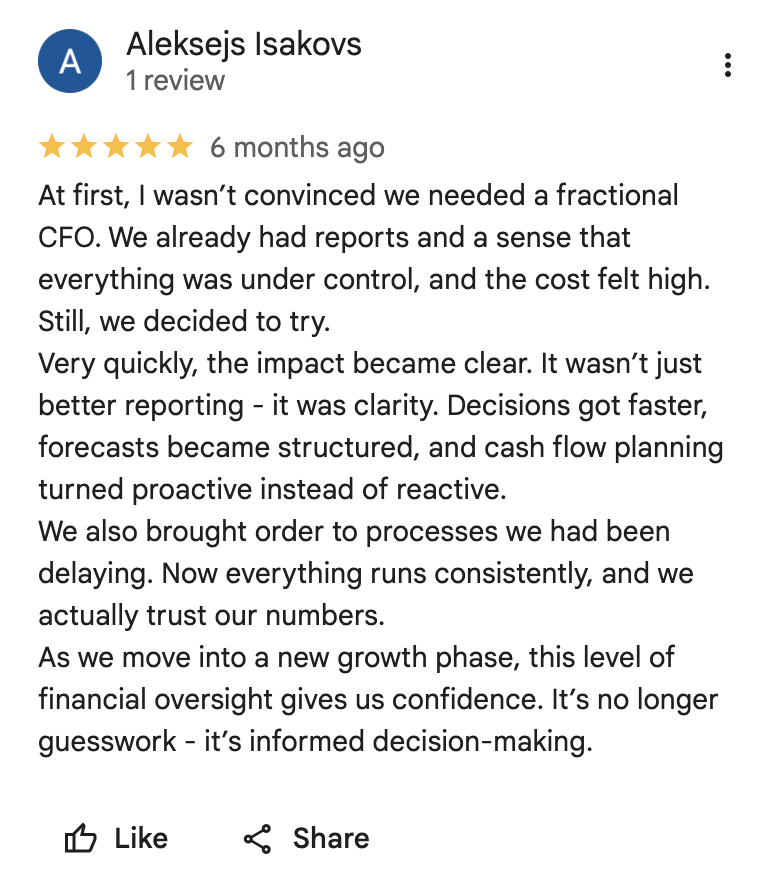
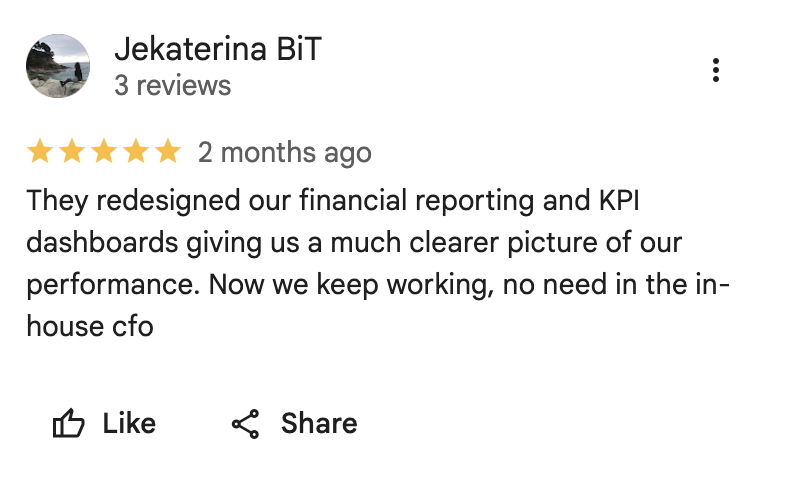
CFO. Turns that history into forward-looking decisions. Output: a cash forecast you trust, margin by product and channel, a pricing decision, a hiring plan you can afford, a model an investor believes.
Why the gap hurts
Statutory accounts arrive months after the period they describe, are structured for the tax authority, and are usually blended across products and channels. You cannot price a SKU, decide a hire or plan stock from them. Founders read them, feel informed, and still make the call on instinct.
What good looks like together
Bookkeeper current to last week. Accountant filing on time. CFO producing management accounts within two weeks of month end, a rolling 13-week cash forecast, and one call per month where a decision is actually taken. Each role does what it is good at, and no one is paid senior rates to do data entry.
Which one to add next
If your ledger is behind, hire bookkeeping. If filings are risky, fix the accountant. If both are fine and you still cannot answer "did we make money last month and where", the missing role is the CFO.
Related questions
Can my accountant act as a CFO?
Some can, most do not. Compliance accounting and commercial decision support are different skills, and the incentives of a filing practice rarely include your pricing strategy.
Do I need a bookkeeper if I hire a fractional CFO?
Yes. We work on top of a maintained ledger. If it is not maintained, the first phase is getting it there.
Will a CFO replace my accountant?
No. We work alongside them and usually make their job easier, because the data arrives structured and on time.
Written from our own CFO engagements: how we scope retainers, what we deliver in the first 30 days, and what founders actually ask on diagnostic calls. Third-party studies are cited only when we can link them.
- How we scope engagements – our published scoping factors
A free 30-minute call with a senior CFO. No sales pitch – just a clear read on where your money is and what to do next.