
Gaming Group
How We Built a Roadmap to Double a Gaming Group’s Valuation Within 1 Year
The situation
Due to a complex holding structure and varying performance levels across subsidiaries, management lacked a clear understanding of the standalone value of each entity and the consolidated value of the group as a whole.
Each subsidiary operated under different regulatory regimes, revenue models, and cost structures, making it difficult to assess performance on a comparable basis.
Our approach
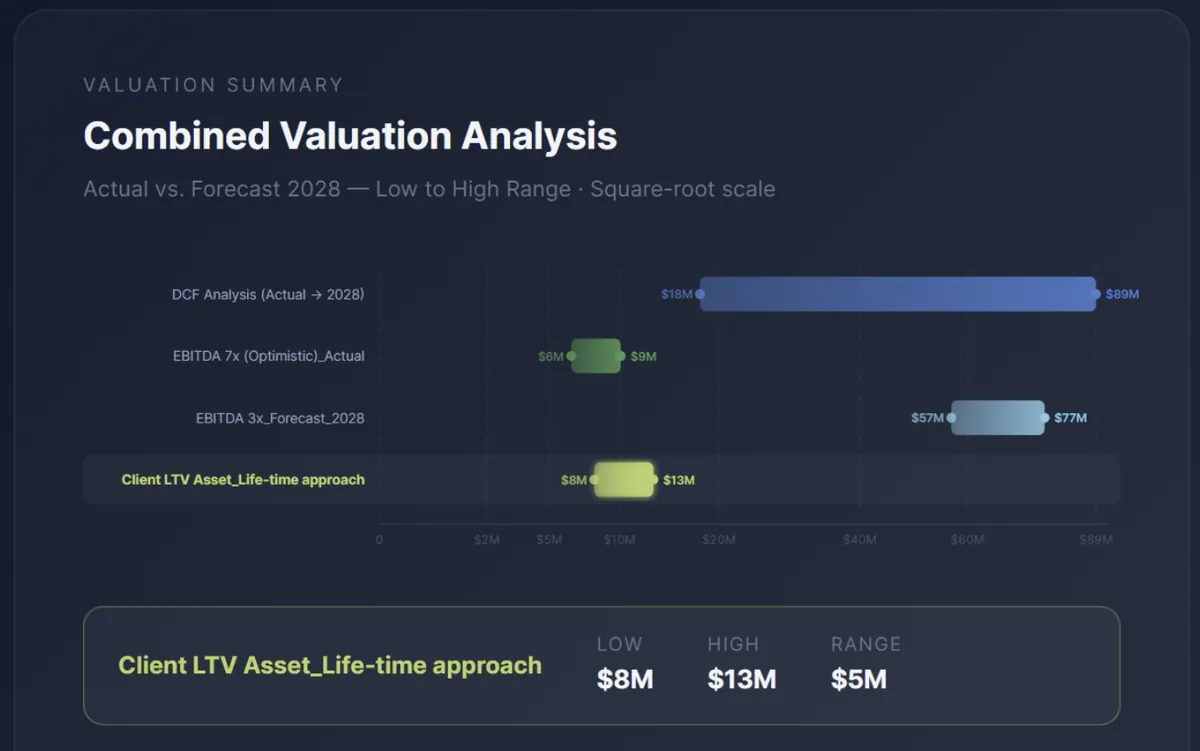
Deliver a transparent, data-driven valuation of each subsidiary individually and a consolidated group valuation, while clearly outlining value drivers, risks, and growth potential specific to the gambling industry.
- 1Conducted a detailed structural and financial analysis of all daughter companies within the group.
- 2Built standalone financial models for each subsidiary, reflecting market-specific regulations, tax structures, revenue streams, and operating costs.
- 3Assessed key iGaming performance metrics: Gross Gaming Revenue (GGR), customer acquisition costs, player lifetime value, margin profiles, and scalability.
- 4Applied appropriate valuation methodologies for each entity (DCF, comparable multiples, and scenario-based approaches).
- 5Developed a consolidated group valuation model, accounting for intercompany dependencies, shared services, and synergies.
Outcome
- Developed a strategy to increase the valuation x2 within 1 year.
- Achieved full visibility into the individual value of each subsidiary.
- Gained a clear understanding of the total group valuation.
Engagement timeline
Diagnose → Build → Deploy → OperateConducted a detailed structural and financial analysis of all daughter companies within the group.
Built standalone financial models for each subsidiary, reflecting market-specific regulations, tax structures, revenue streams, and operating costs. Assessed key iGaming performance metrics: Gross Gaming Revenue (GGR), customer acquisition costs, player lifetime value, margin profiles, and scalability.
Applied appropriate valuation methodologies for each entity (DCF, comparable multiples, and scenario-based approaches).
Developed a consolidated group valuation model, accounting for intercompany dependencies, shared services, and synergies.
Before & after
- Due to a complex holding structure and varying performance levels across subsidiaries, management lacked a clear understanding of the standalone value of each entity and the consolidated value of the group as a whole.
- Each subsidiary operated under different regulatory regimes, revenue models, and cost structures, making it difficult to assess performance on a comparable basis.
- Developed a strategy to increase the valuation x2 within 1 year.
- Achieved full visibility into the individual value of each subsidiary.
- Gained a clear understanding of the total group valuation.
Artifacts delivered
What the founder walked away withThis engagement is covered by a mutual non-disclosure agreement. Company name, logo, jurisdiction detail, and internal figures are withheld. The situation, approach, and outcomes above are published with the client's written consent and reflect real work delivered by John Galt Finance.
More client stories
See all

Remilia Hair: From a severe liquidity crisis to strong growth in Amazon&Shopify revenue.


How We Took Huntli From the Brink of Bankruptcy to 6× More Runway in Just 2 Months