 JG Magazine Practical finance articles, tool comparisons and CFO insights for founders.Read more
 How-To Guides Every answer and playbook, newest first.Read more
 Cases Remilia Hair: How We Helped Remilia Hair Navigate a Cash Crisis With a 12-Month Runway Model and 5-Year Growth PlanRead the case
 YouTube channel Founder finance explained on video: cash, margins, pricing and CFO playbooks.Open channel
 Tools Free calculators and templates: financial model, cash flow, unit economics.Open tools
JG Magazine
Practical finance articles, tool comparisons and CFO insights for founders.


How to Get Out of a Cash Flow Gap: 4 Ways to Save Your Business
A cash flow gap is the period when you owe more than you have. Find its real size and cause, then close it: collect faster, pay later, raise short-term financing or bring in capital.

John Galt Forum 5.0: F*ckup & Success Stories | Riga 2026
John Galt Forum returned for its fifth edition, and it was about telling the truth. Founders told their stories as they happened, f*ckups included.

How to Build a Payment Calendar and Manage Cash Flow: Prevent Cash Gaps Before They Happen
Your bank balance today doesn’t show tomorrow’s commitments. Use a payment calendar to spot cash gaps early, plan payments and protect your cash buffer.

Revenue Is Growing, but Profit Isn’t: Why It Happens and What to Do?
Growth doesn’t automatically create profit. Learn why EBITDA can fall while sales rise and what to change in margins, pricing, hiring and customer acquisition.

Top 5 Books Every Entrepreneur Should Read
Five practical books for founders: how to test ideas fast, understand crises, tell real trends from noise, think on a bigger scale and keep building in hard times.
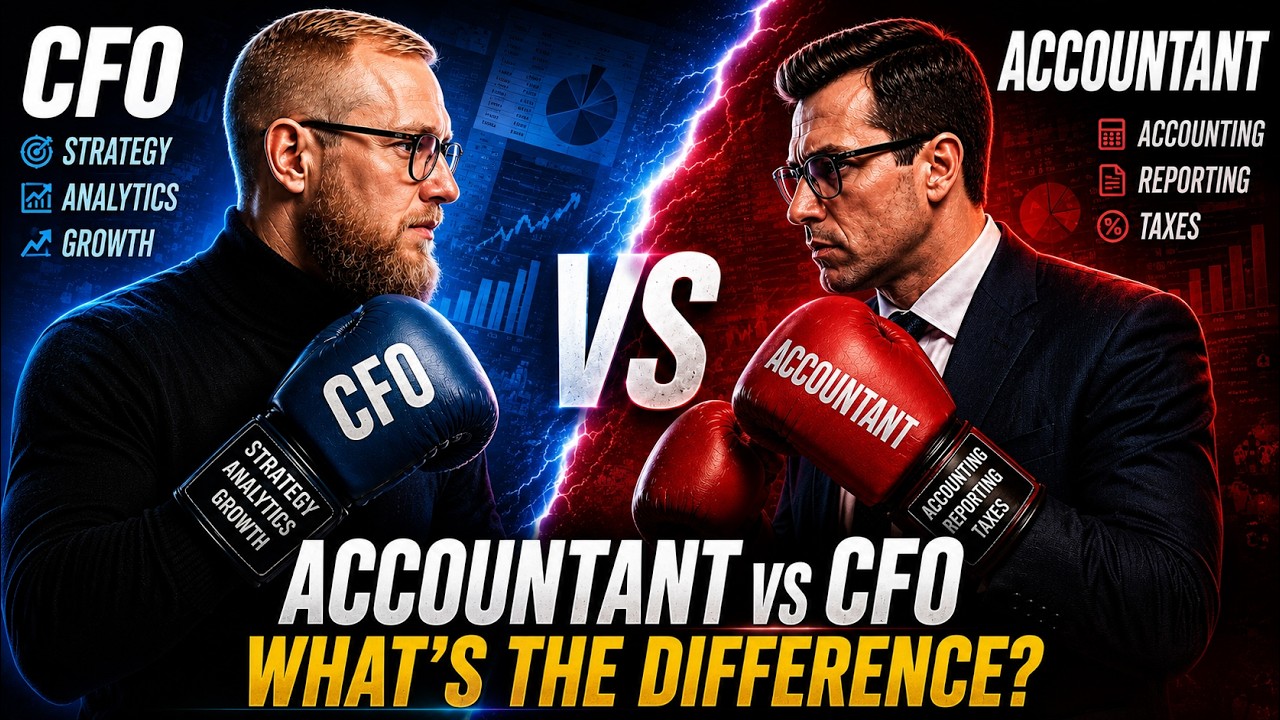
Finance Director vs Chief Accountant: Roles, Differences and Which to Hire First
A chief accountant makes sure the numbers are correct, closed on time and compliant with tax and accounting rules. A finance director uses those numbers to plan cash, profit and funding, and to tell the CEO what to do next. Fix messy books first; once they are reliable, add finance leadership.
Asana vs Monday vs Trello 2026: Best PM Tool
Trello is the cheapest and simplest, free for up to 10 collaborators and $5 per user on Standard. monday.com suits 10 to 100 people who want visual, customizable workflows, from €9 per seat with a three-seat minimum. Asana scales best for cross-team projects and goals, from $10.99 per user, but its free plan now covers only two users.
Brex vs Mercury vs Ramp: 2026 Business Banking
For most US startups the cleanest setup is Mercury as the operating bank and Ramp for cards, expenses and bill pay; both have free core plans. Brex, now owned by Capital One, suits companies that want banking, cards and spend controls on one platform and meet its cash or revenue thresholds. None of the three is itself a bank.
Burkland vs Kruze 2026: Startup CFO Firm Compared
Both firms serve US venture-backed startups from San Francisco. Burkland is the broader outsourced finance function, with published prices for accounting from $495 a month, fractional CFO from $1,600 a month, plus tax, HR and payroll. Kruze is a CPA firm centered on accounting and startup tax, with bookkeeping from $650 a month and CFO advisory available.
Calendly vs Cal.com vs Acuity 2026: SMB Guide
Calendly is the safe default for B2B sales and client meetings, from $10 per seat a month. Cal.com gives teams similar routing for less, from $12 per user and the best free plan, but its core product went closed source in April 2026. Acuity, part of Squarespace, suits appointment businesses selling packages, from $16 a month flat.
Carta vs Pulley vs Capbase 2026: Cap Table Showdown (Pulley Is Shutting Down)
Pulley is shutting down on December 8, 2026, so the real choice is now Carta or Capbase. Carta is free up to 25 stakeholders and $1M raised, and its Grow plan bundles 409As. Capbase costs $999 a year and suits pre-seed founders who also need incorporation. Pulley customers should export their data and decide before November 30.
CFO-Level Financial Reporting: Examples and KPI Insights
CFO-level reporting goes beyond the P&L. A monthly pack combines the three statements against budget, a cash forecast, 8 to 12 KPIs and a one-page commentary that explains what changed, why, and what to decide. Bookkeeping tells you what happened; CFO reporting tells you what it means for cash and what to do next.
Chart of Accounts: How to Structure It for Clear Reporting
A good chart of accounts groups every account into assets, liabilities, equity, revenue and expenses, numbers them in ranges with gaps for growth, and keeps cost of sales separate from overheads so gross margin is visible. Keep it lean, put locations and departments into tracking dimensions, and change it only at a year-end.
ChartMogul vs Baremetrics vs ProfitWell 2026 Compared
All three have a free entry point. ProfitWell Metrics, owned by Paddle, is free at any size and fine for simple Stripe-style setups. Baremetrics is free to $180K ARR and suits founders who want fast, clean dashboards. ChartMogul is free to $10K MRR and is the strongest choice for multiple billing systems and board-grade segmentation.
Financial Model vs Business Plan: What Each Does and Which You Need
A business plan is a document that explains what you are building, for whom and how you will win. A financial model is a working spreadsheet that turns those choices into revenue, costs and cash month by month, and shows what happens when assumptions change. The plan sets direction; the model checks whether the direction is affordable.
Financial Scenario Planning: Grow Smarter in 2026
Financial scenario planning means modeling a base, downside and upside version of the next 12–24 months, plus one or two stress tests, and deciding in advance what you will do in each. It differs from forecasting because it plans responses, not just predictions. Tie every scenario to cash and to a measurable trigger.
Financial Turnaround Strategies: How to Rescue a Business in Distress
A financial turnaround runs in four stages: stabilize cash with a weekly 13-week forecast, diagnose which customers, products and channels lose money, restructure costs and contracts around the profitable core, then rebuild growth on tighter rules. Speed matters more than perfection. Most failed turnarounds started too late, not with the wrong plan.
Gusto vs Justworks vs Rippling 2026: Payroll & HR Compared
Gusto is the simplest and cheapest way to run US payroll for small teams, from $49 a month plus $6 per person. Justworks is a PEO: it costs $79 to $124 per employee but can unlock large-group benefits. Rippling is a modular HR, payroll and IT platform for teams that are scaling fast and want one employee system.
HubSpot vs Pipedrive vs Close: Best 2026 Sales CRM
Pick HubSpot if marketing and sales need one shared customer record; it has a free plan and paid seats from $20 (often discounted). Pick Pipedrive for a simple visual pipeline at $14 to $79 per seat. Pick Close if your reps live on the phone: calling, email and SMS are built in from $9 per user.
John Galt Finance vs J. Galt Finance Suite: Which One Are You Looking For?
They are two unrelated companies. J. Galt Finance Suite is a US business credit service, listed in Indianapolis, that helps owners build credit on their company's EIN. John Galt Finance (JGF SIA) is a fractional CFO firm in Rīga, Latvia, that runs forecasting, reporting, financial models and fundraising support for founders.
Mailchimp vs ConvertKit (Kit) vs ActiveCampaign 2026: Pricing and Fit
Mailchimp suits small ecommerce and general SMB lists that want templates and a low learning curve. Kit, formerly ConvertKit, is built for creators and newsletter businesses and is now the cheapest of the three at 25,000 subscribers. ActiveCampaign has the deepest automation for B2B funnels, but costs the most as lists grow.
Notion vs ClickUp 2026: Which Wins for SMBs?
Notion is a docs-first workspace: the better choice when your main problem is scattered knowledge, SOPs and client pages. ClickUp is task-first: better when the problem is deadlines, workload and time tracking across many projects. Paid seats start at $10 (Notion Plus) and $7 (ClickUp Unlimited) per user a month on annual billing.
Overhead Cost Allocation: Methods, Steps and a Worked Example
Overhead cost allocation spreads shared costs such as rent, admin salaries and software across the products, customers or locations that cause them. Group overhead into pools, give each pool a cost driver with a real causal link, divide to get a rate, and apply it. Revenue is the most common driver and usually the wrong one.
Payroll Cost Management: How to Control Your Biggest Expense
Payroll cost management means knowing the fully loaded cost of every role, tracking payroll against revenue and gross profit monthly, and approving headcount with a payback case. In US private industry, benefits are 30% of total compensation, so salary alone understates what a hire costs by more than 40%.
Pilot vs Bench 2026: Best Outsourced Bookkeeping?
Pick Pilot if you are a venture-backed or fundraising startup that needs accrual books, a US tax filing for a C-corp and a ledger an investor can diligence. Pick Bench if you are a small US business under about $250K revenue that wants low-cost, done-for-you books. Bench shut down in December 2024 and relaunched under Employer.com, so check continuity terms.
Profit Margin Analysis: How to Find and Fix Margin Leaks
Profit margin analysis measures how much of each euro of revenue you keep at four levels: gross, operating, EBITDA and net. Calculate each, split them by product, customer and channel, compare them with your own history and an industry benchmark, then explain every change by price, volume, mix and cost. That shows exactly where margin leaks.
QuickBooks vs Wave vs Zoho Books 2026: SMB Verdict
Wave is the best free option for a solo US or Canadian owner who mainly invoices. Zoho Books gives the most features per dollar, with multi-currency and inventory from $40 a month billed annually. QuickBooks Online costs the most, from $38 a month, but is the safest pick if a US accountant or bookkeeper will work in your books.
QuickBooks vs Xero 2026: Which Wins for Small Business?
QuickBooks Online is the safer choice for US businesses whose accountant uses it and who want payroll in the same product. Xero is cheaper for growing teams, with no per-user fees and multi-currency on its $97 Established plan, and is the default for accountants in the UK, Australia and New Zealand. Choose the one your accountant works in.
Real Estate Investment Analysis: Key Metrics for SMBs
Real estate investment analysis treats a property like a small business: build a pro forma to get net operating income, then test it with cap rate, cash-on-cash return, DSCR and IRR. Size debt to what the income supports, stress-test vacancy, rent growth and exit cap rate, and compare the result with a risk-free yield before you buy.
Restaurant Financial Management: Food Cost, Labor and Prime Cost Guide
Restaurant financial management comes down to prime cost (food, beverage and labor as a share of sales) tracked weekly, plus a cash routine that keeps sales tax, tips and payroll separate from operating money. US median pre-tax profit was 2.8% of sales for full-service restaurants, so one point of prime cost can be a third of the profit.
Return on Invested Capital (ROIC): The Quality Metric
Return on invested capital (ROIC) is after-tax operating profit divided by the capital tied up in running the business. It shows whether growth creates value: only when ROIC beats your cost of capital does each reinvested euro make owners richer. Calculate it from EBIT, exclude excess cash, and track the trend, not one year.
SaaS Finance: The Complete Playbook for Metrics, Planning and Fundraising
SaaS finance is running a subscription software business on recurring revenue, retention and capital efficiency rather than on profit alone. In practice it means one clean ARR definition, cohort-based unit economics, a driver-based model that ties bookings, revenue and cash, and a monthly rhythm that turns those numbers into hiring, pricing and spending decisions.
SaaS Financial Metrics: 12 KPIs Every Founder Must Track
Track twelve SaaS financial metrics in four groups: revenue (MRR, ARR, growth), unit economics (CAC, LTV, LTV:CAC, CAC payback), retention (gross and net revenue retention, logo churn) and efficiency (burn multiple, gross margin). Review cash and MRR movement weekly, the full set monthly, and cohorts quarterly.
SaaS Pricing Strategy: How to Model Pricing for Maximum Revenue
A good SaaS pricing strategy picks a model and value metric that grow with customer value, packages it into a few clear tiers, and tests every change in a financial model before launch. The key number is break-even churn: at 80% gross margin, a 10% price rise pays off unless you lose more than about 11% of customers or volume.
Series A Fundraising: What Investors Want to See
Series A investors fund evidence, not potential: retention that proves product-market fit, a sales motion that works without the founder, unit economics that justify more spend, and clean numbers. In Q1 2026 the median US Series A was $19.6m at a $62m pre-money valuation, but AI companies raise at far higher prices than everyone else.
Slack vs Microsoft Teams 2026: SMB Comparison
If you already pay for Microsoft 365, Teams is included and is usually the cheaper choice. Slack Pro costs $7.25 per user a month billed annually and gives a better chat and integration experience, but it does not replace email, office apps or file storage. For a Google Workspace or tool-heavy team, Slack is often worth it.
Stripe vs Square 2026: Which Payment Processor Wins?
Pick Stripe if most of your revenue is online, recurring, invoiced or international. Pick Square if most of it is taken in person in a shop, restaurant or studio. Online card fees look similar, but Square's free plan now charges 3.3% + 30¢ online versus Stripe's 2.9% + 30¢, and the tools around the fee differ far more than the fee itself.
Who Is John Galt? The Company Behind the Name
John Galt is a character from Ayn Rand's 1957 novel Atlas Shrugged. John Galt Finance is something else: JGF SIA, a fractional CFO firm headquartered in Rīga, Latvia. A 12+ person team of CFOs and analysts runs forecasting, reporting, financial models and fundraising support for founders, month-to-month.
Why Audit Financial Models: A Business Owner's Guide to Model Audits
Audit a financial model before you use it for a decision that is hard to reverse: a raise, a loan, an acquisition or a big hire. A model audit checks that inputs are sourced, formulas are consistent, the three statements balance and assumptions hold up. The reviewer must be independent of the person who built it.
Zeni vs Pilot vs Bench 2026: Best Bookkeeping Service?
Bench is the low-cost choice for small, simple US businesses, now under Employer.com after its 2024 shutdown. Pilot is the deepest option for venture-backed startups that need accrual books, tax and R&D credits. Zeni suits startups that want AI bookkeeping with bill pay, reimbursements and banking in one product. Compare full-year cost, not entry prices.
Fractional CFO vs Financial Controller: Which Does Your Business Need?
A financial controller makes sure your numbers are accurate, closed on time and compliant. A fractional CFO uses those numbers to plan cash, set strategy and prepare you for growth or fundraising. If your books are messy, hire a controller first. If your books are fine but you can't answer "what happens next?", you need a CFO.
Fractional CFO Services for Amazon Sellers: What They Do and When You Need One
A fractional CFO helps an Amazon seller see which products really make money after fees, ads and returns, and plan the cash that inventory ties up for months. An accountant records what happened. A fractional CFO tells you what to reorder, what to cut and how much cash you will have in 13 weeks.
Best Ecommerce CFO Services: How to Choose and Who to Consider
The best ecommerce CFO service is the one that understands inventory, ad spend and cash timing, not just accounting. Choose on five things: inventory and COGS depth, cash forecasting, profit by channel, unit economics (CAC, LTV, MER) and fit with your revenue size. Price and brand come second.
Fractional CFO Services for Shopify Brands
Shopify makes selling easy and finance hard. Sales, payouts, fees, refunds, ad spend and stock sit in different systems, and none of them shows what the business really earns. A fractional CFO connects them and tells you what to do next.
Best Fractional CFO Firms for Ecommerce in 2026
Choose a fractional CFO by the problem you need solved: cash and unit economics, ad-spend profitability, accounting plus tax, or real-time books and inventory. This guide covers five firms, described from their own public materials as of October 2026.
Amazon Agency vs. In-House Team: When Should Sellers Outsource and When Should They Hire?
A practical framework for Amazon sellers deciding when to use an agency, when to hire internally, and when a hybrid model creates the strongest team.
Stop guessing. Start deciding on facts.
A free 30-minute call with a senior CFO. No sales pitch – just a clear read on where your money is and what to do next.
30 min · No pitch · A real CFO, not a chatbot