
E-commerce finance: cash, margin and reporting in one place
E-commerce finance is the set of numbers that decide whether growth makes you richer or just busier: cash timing, margin per SKU, inventory, ad payback and monthly reporting. This hub groups our guides, playbooks, tools and case studies by the question you are trying to answer, so you can go straight to the one that fits.
Cash and working capital
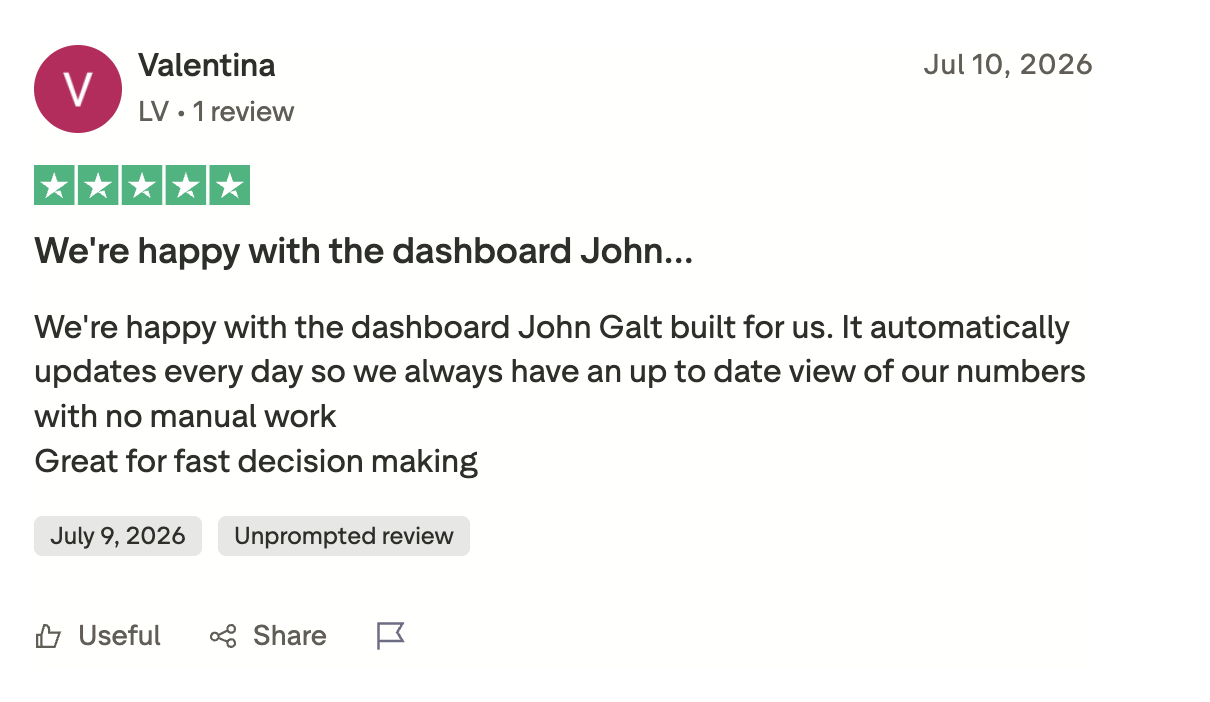
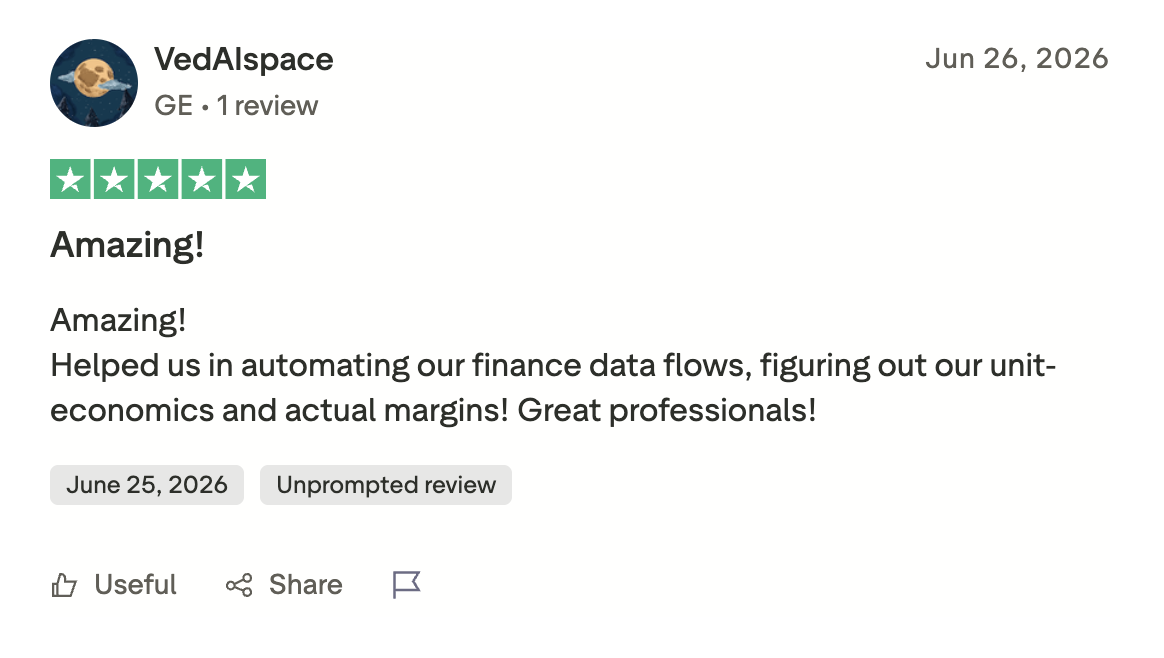
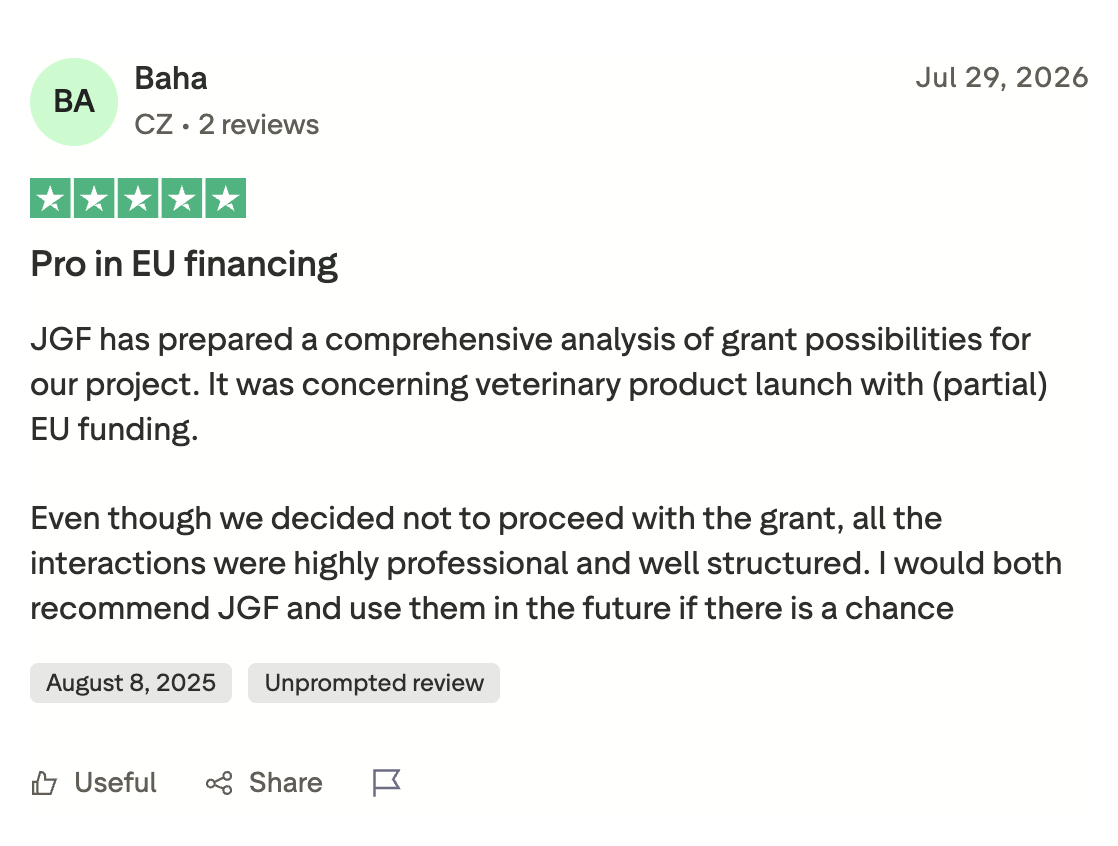
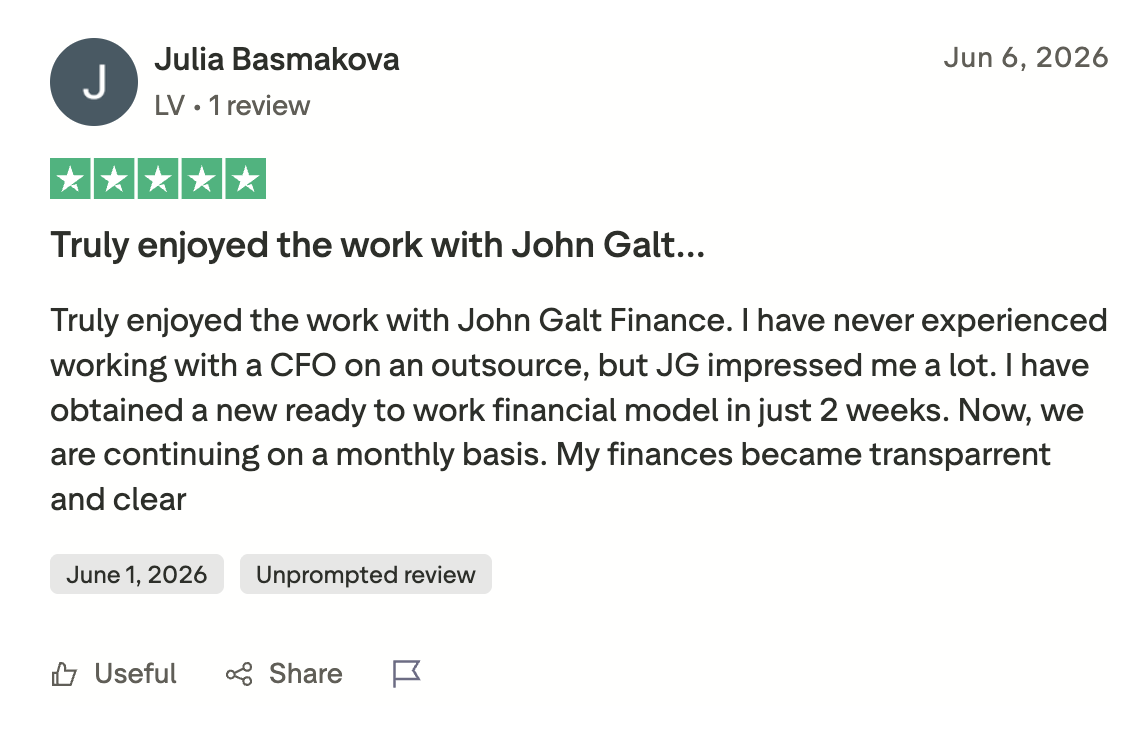
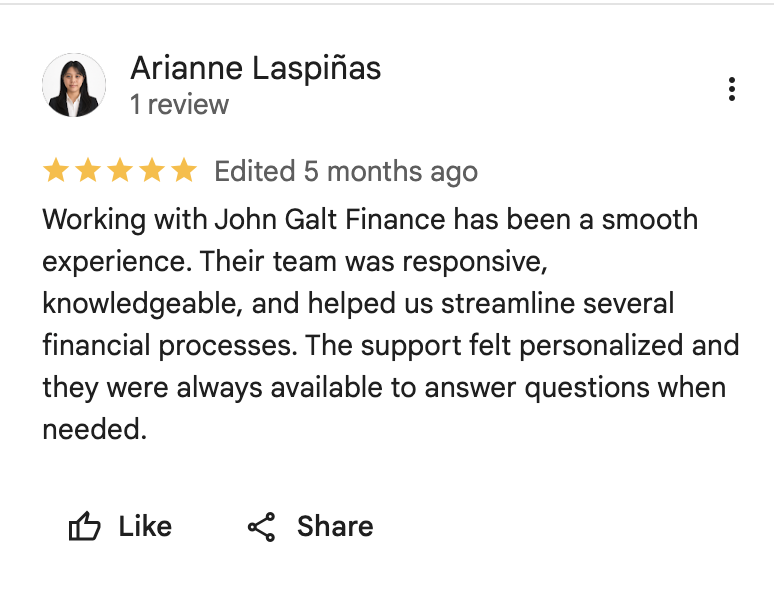
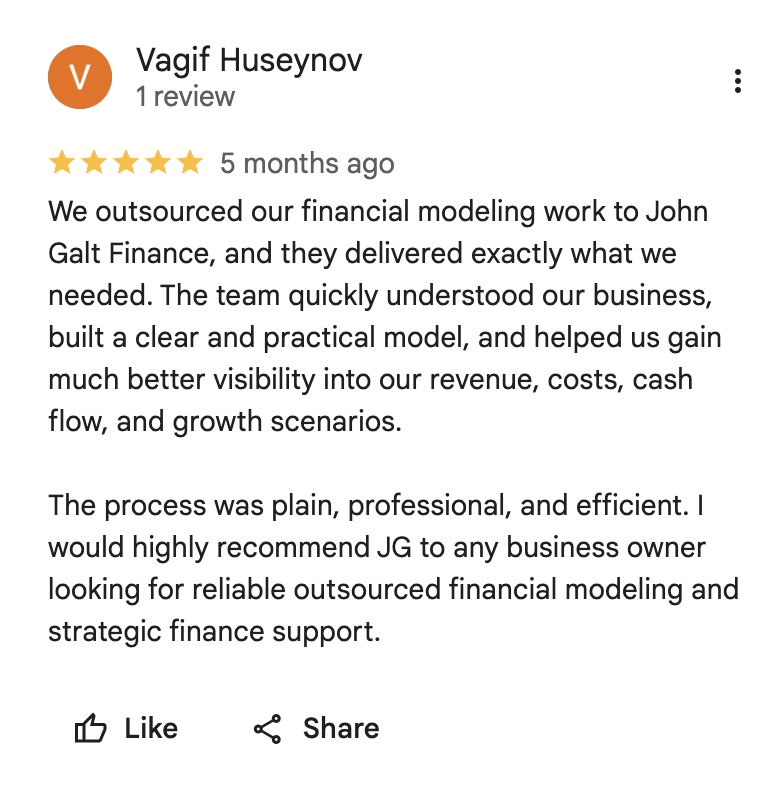
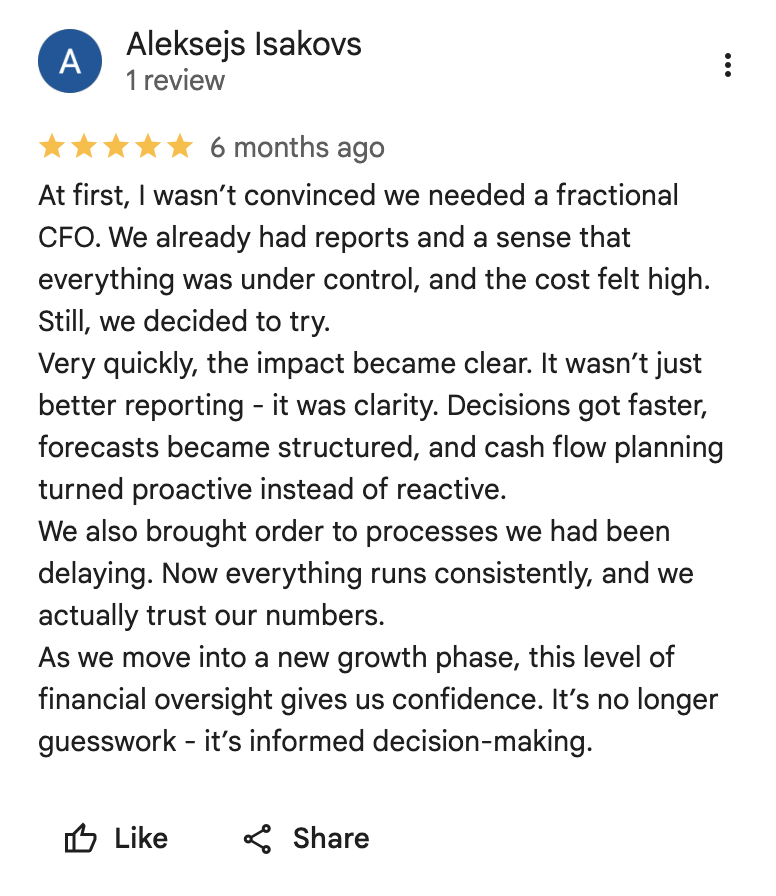
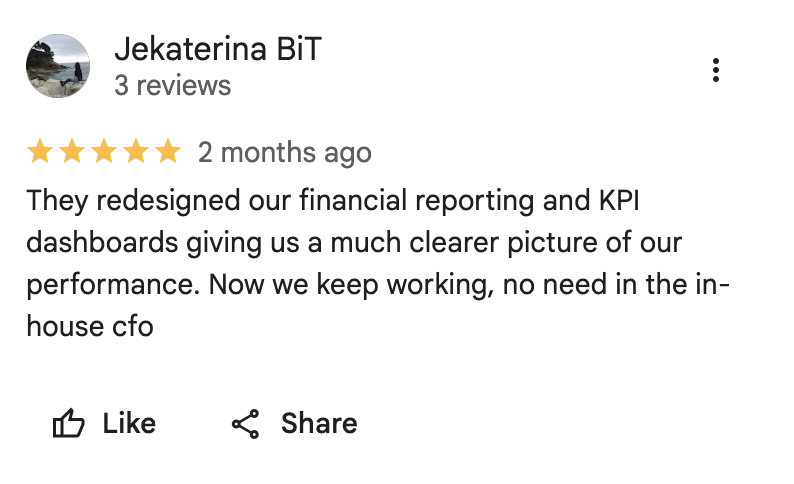
What our clients actually say.









E-commerce finance: common questions
What is e-commerce finance?
E-commerce finance is the set of numbers that decide whether growth makes you richer or just busier: cash timing, margin per SKU and channel, inventory, ad payback and monthly reporting. It goes beyond bookkeeping and tax filing and turns store, marketplace and ad data into decisions on pricing, purchasing and spend.
Why do profitable e-commerce brands run out of cash?
Because of timing. You pay suppliers, freight and duties weeks or months before the customer's money turns into cash you can spend, and you pay for ads before the order arrives. Inventory is cash you have already spent, so growth consumes cash before it creates it. A rolling 13-week forecast shows the gap early.
Which numbers should an e-commerce founder review every week?
Start with cash: the expected closing balance for each of the next 13 weeks and any week that drops below your buffer. Then contribution margin after fees, shipping, returns and ads, true ROAS or MER against your target, and inventory on hand and on order against sell-through. Review profit in depth monthly.
When does an e-commerce brand need a fractional CFO?
When revenue grows but cash in the bank does not, when you cannot name the fully loaded margin of your top SKUs, when Shopify, Amazon and wholesale results cannot be compared side by side, or when supplier payments and payouts keep surprising you. A fractional CFO adds that control on a monthly retainer, without a full-time hire.